Subscribe FREE to: Magazine | Newsletter | Linked In | Twitter Facebook


ODT Magazine


Search  

Home / Providing a Push

Providing a Push

OEMS and suppliers drive need for new materials, respond to clinical needs.

Mark Crawford

OEMs are always trying to boost the performance of the devices they design, which often means finding new materials with better features (and new process technologies to use them). Current


TECANYL MT, made from Sabic’s Noryl, is a new polyphenylene ox-ide polymer resin for use in joint replacement trials. Photo courtesy of Ensinger Inc.

metallic orthopedic implants, usually titanium, stainless steel or cobalt chromium, may last only 10 to 15 years. Tissue does not generally attach well to their surfaces, which may lead to rejection of the implant and additional surgeries. Researchers and designers are keen on improving the life of the implants, both through surface modifications that enhance bone and tissue growth, as well as new technologies whereby stem cells grow into bones and replace biodegradable plastic materials.

“Most materials used in medical devices are selected from commercially available materials, most of which were developed for industrial applications,” said Susan M. Abkowitz, vice president of technology and operations for Dynamet Technology Inc. in Burlington, Mass. “In recent years there has been increasing effort to develop and apply new materials that are better suited for medical implants.”

Common materials used in the North American orthopedic market are polycarbonate (PC), polyester, polysulfone, specialty resins, polyoxymethylene (POM), and nylon. OEMs and their suppliers are driving the push for new materials. OEMs, responding to the clinical needs of their hospitals and physicians, are designing products that require new materials for improved functionality; suppliers and vendors sometimes develop and test their own new materials and pitch them directly to their OEM clients.

“For us, this works both ways,” said Abkowitz. “Some of our materials, such as CermeTi MMCs (titanium metal matrix composites), were originally developed for aerospace, defense or other applications and we later discovered that some of the improved properties have application in medical devices. Other materials, such as our titanium-tantalum compositions, are being developed specifically with application to medical devices in mind.”

OEMs are constantly on the hunt for materials that improve functionality and compatibility within the human body and give them a competitive edge in the marketplace—materials that are lighter weight, more flexible or stiffer, stronger, easier to process and assemble, traceable on X-rays, or antimicrobial in nature. Other healthcare trends affecting material selection are cost control (such as metal-to-plastic and glass-to-plastic conversions), user comfort (ergonomics, overmold, lighter weight) and biocompatibility measures (genotoxity, hemolysis, cytotoxicity, sensitization and irritation, acute systemic toxicity, physiochemical testing and intracutaneous reactivity).

“OEMs are also driven by environmental/health safety concerns such as phthalate plasticizer issues and chlorine content, BPA leaching, and green issues such as biodegradability,” said Michael Hansen, senior technical development engineer at Mack Molding Company in Arlington, Vt.

Understanding clinical needs and drivers is critical to the successful development of new biomaterials. Without this as a starting point, it is very challenging to design a material that is innovative and advanced enough that it provides a better solution compared to what already exists on the market and is readily accepted by healthcare providers.

“In joint replacement and reconstruction, for example, new materials are challenged to meet the requirements for lower-wearing and longer-lasting devices for the younger patient population,” said Amy Kinbrum, product development scientist for Invibio Biomaterials Solutions in West Con-shohocken, Pa. “Stress shielding, which can result in sub-optimal bone healing, and the release of metal ions into the body, are also considerations. Overall, there is keen interest in advanced implant designs that are not possible using metals and existing polymeric biomaterials, such as large femoral heads in hip arthroplasty which can reduce dislocations and smaller-sized knee prostheses that enable bone conservation and less invasive surgeries. There is also a clear need for post-surgical imaging of the device and surrounding tissue for healing assessment, which is difficult with metal implants.”

Occasionally a company brings a new polymer or composite to market that has interesting characteristics but was not developed with any specific market or application in mind. “More often, however, industry specialists work with OEM design engineers to ‘find the pain’ and then try to come up with a polymer and process solution that solves the problem,” indicated Bruce Dickinson, marketing manager at Ensinger Inc. in Philadelphia, Pa. “The development of our radio-opaque materials is a good example of this process. The engineers we met indicated they needed surgical devices that would be lighter in weight than the incumbent metal fixturing, but the radiolucent nature typical of plastics was problematic when doctors wanted to see the device on X-ray for alignment purposes. Once we developed the material, some trial manufacturers also recognized the advantage of being able to offer doctors a product that they could be certain would show up on X-rays, thus giving added insurance against the possibility of accidentally leaving a part or a piece of a part behind inside a patient.”

Research Trends


Current research trends include work on self-reinforced polyphenylene (SRP; which is more like bone in stiffness), new sources for polyphenylsulfone (PPSU), antimicrobial additives, sterilizable versions of less expensive resins, cyclic olefin copolymer (COC) resins with optical properties comparable with PMMA (polymethyl methacrylate, acrylic resin) and higher heat resistances compared to polycarbonate, thermoplastic elastomers (TPEs), sustainability performance, PVC replacement alternatives, metal injection molding and new polyetheretherketone (PEEK) polymers and PPSU/PEEK blends.

The first implantable PEEK polymer was pioneered in 1999 by Invibio Biomaterial Solutions. In the past 10 years implantable PEEK has become an established biomaterial across a wide range of implantable applications. Applications include spinal fusion and motion preservation, joint replacement, trauma applications and arthroscopy implants. The diverse nature of its implementation is due in part to the versatility and unique mechanical properties of the material, which exhibits high strength, stiffness and fatigue resistance.

Currently, Invibio is actively engaged with over 30 key research institutes to advance the understanding of implantable PEEK biomaterials and how they can benefit patients. In recent years Invibio has introduced several PEEK-based implantable biomaterials, including MOTIS polymer. “The development of these products is driven by clear clinical demands,” said Kinbrum. “MOTIS polymer is a novel, carbon fiber-reinforced PEEK polymer with advanced properties specifically developed for articulating devices against hard counterfaces, such as metal and ceramic. Studies have demonstrated the extremely low wear rates of MOTIS in hips and knees articulating against metal and ceramic counterfaces. Importantly, the modulus (stiffness) of MOTIS is closely matched to that of cortical bone, and is shown to encourage load sharing and minimize stress shielding, necessary for healthy bone. The inherent mechanical strength of MOTIS enables the design and production of extremely thin and flexible device elements that provide physiological stress transfer, thereby minimizing bone loss, fostering bone strength and reducing the tendency of fracture.”

Dynamet Technology Inc. has also developed new materials that enable significant improvements over existing materials. An example is its CermeTi materials—titanium metal-matrix composites that have many of the benefits of conventional titanium with the added advantage of wear resistance—a significant new material advancement.

“The properties of this material permit its use in articulating parts, such as artificial cervical discs, where conventional titanium materials could not be used in a metal-on-metal de-sign,” said Abkowitz. “This material is an extension of our titanium powder metal technology. Our processing technology enables the creation of new titanium compositions because, unlike the traditional manufacturing methods, we produce the material without melting. This has permitted innovative compositions to be included in the blend with other metal and even ceramic powders. In the case of CermeTi, the ceramic was added to provide a material with the light weight and strength of titanium but with higher modulus (stiffness). Although wear resistance was a secondary consideration in the original development, this characteristic has become of prime importance in many applications.”

The CermeTi materials are actually a family of materials that are particle-reinforced metal-matrix composites. They can include different levels of ceramic particles in a matrix of titanium alloy and be processed into different forms from the initial manufacturing process. “These materials offer wear resistance, higher modulus, elevated temperature strength and improved creep strength and maintain many desirable characteristic of titanium such as light weight, biocompatibility and corrosion resistance,” added Abkowitz. “They are also nonmagnetic and compatible with medical imaging.”

One of Ensinger’s new material advances is TECANYL MT, made from Sabic’s Noryl, a new polyphenylene oxide polymer (PPO) resin for use as joint replacement trials. TECANYL offers improved machining characteristics that reduce tool wear, increase efficiencies and lower part manufacturing costs without affecting temperature or chemical resistance. “These characteristics are critical in parts that must survive multiple autoclave cycles,” said Dickinson.

Ensinger has also been at the forefront of developing technology to provide engineering plastics with properties of radio-opacity, which makes them visible on X-rays. “Most thermoplastics are inherently radiolucent, limiting their use in applications created by image guided surgeries that require clear visibility of fixturing and targeting guides through fluoroscopy and X-ray equipment,” said Dickinson. “Ensinger’s radio-opaque materials use special proprietary additives to make them visible under these new and unique circumstances. We also have the ability to compound the additive into other product lines.”

Regulatory Standards

Costs associated with developing a new material and qualifying it in a device are high. “There would have to be very substantial savings or significant market increase to create an incentive to go through this complicated process for a lower cost device,” said Abkowtiz. “However, there are some opportunities where new materials could produce sufficient savings as alternatives to devices that use expensive materials. We are working on some materials that could result in reducing the price for a device through substitution of a new lower-cost material.”

There is an initial cost that product developers incur during the early stages of new product development. Initial resin costs are usually high, as are extrusion setup and minimum run costs. However as the application or market matures, these costs typically go down as the companies take advantage of higher volumes and better efficiencies.

The level of necessary testing depends upon the end use for which the material or part is intended; typically anything going into a medical application must at a minimum have U.S. Food and Drug


The MOTIS polymer acetabular cup provides excellent wear properties, enable thinner designs and anatomical stress transfer, and can be manufactured via injection molding. Photo courtesy of Invibio.

Administration and United States Pharmacopeia Class VI compliance. If the part is going to come in contact with tissue or bodily fluids, the number and level of compliance documentation increases to include ISO 10993. “In many cases those compliance letters must come from us as the processor, so it does not usually impede an engineer from considering something new if we or our resin supplier have already gone to the expense of completing the necessary testing,” said Dickinson.

Testing can range from one week to several and cost from a few hundred dollars to $25,000 or more. In general, the more likely or longer a material will be in contact with the body or bodily fluids, the more time-consuming and costly the testing will be—and the greater the liability. “Because of liability issues,” Dickinson added, “Ensinger does not currently supply any materials that are intended for human body contact for a period of greater than 30 days [medical grade].”

Before Invibio introduces any material to the market the company puts together a comprehensive FDA master file with extensive biocompatibility safety data, manufacturing specifications, sterilization data and long-term implantation study results. Invibio also invests in application-specific studies to support a novel material introduction.

For example, the MOTIS polymer is supported by “screening data to assist device manufacturers in product selection, wear-data analysis for both knee and hip applications and in-vitro particle response data to understand the nature and biological response to wear debris, said Craig Valentine, Invibio technical manager. “The need for this level of testing and data is one of the reasons there are so few implantable material options out there that can be used in FDA-approved devices.”

On the Horizon


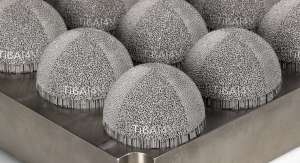
To overcome the drawbacks inherent with metallic implants, research organizations and the private sector are attempting to develop orthopedic implants that have bioactive surfaces to improve the interface with bone, soft tissue, nerves and cardiovascular cells. Research on nanocomposite structures of polymers and ceramics that also would serve as orthopedic implants is under way at Brown University in Rhode Island, which is doing the work in partnership with Nanovis. The goal is to commercialize nanostructured surfaces, materials and medical devices that mimic bone through the creation of three-dimensional structures from titania/PLGA (polylactic-co-glycolic acid), using an aerosol-based 3-D printing technique. So far the device has been shown to promote bone growth that replaces the bioresorbable PLGA in laboratory animals.

Advance BioMedical in Eagan, Minn., is using a biodegradable polyamide material to develop a line of internal fixation devices, screws, binding wires, rods and related products. These products can be used in orthopedic trauma, sports-related medical treatment or cartilage injuries.

Second-generation absorbable products offer significant advantages over either metal implants or first-generation degradable implants, including improved biological activity of materials—for example, as the implants degrade over time they shift their load progressively to the new bone, creating micro-motion that helps minimize bone atrophy due to stress shielding.

A team of University of Connecticut engineers is working on the development of a new family of functionally graded, porous implant materials with a hierarchy of engineered microstructures. This new family of orthopedic implants will address the drawbacks inherent with hydroxyapatite (laminating too quickly) or porous titanium coatings (lack of bioactivity) and will be fabricated using a new solid freeform fabrication method developed at the university. This type of orthopedic implant will be the first of its kind to pair a titanium-rich core and a hydroxyapatite-rich surface with a controlled level of micro- and macro-porosity that has never been achieved before.

Reducing the possibility of infection is always a top priority of orthopedic surgeons. BioIntraface Inc. in East Providence, R.I., designs bioactive and antimicrobial medical coatings for medical devices. The first application of its medical coating technology is as an anti-bacterial coating on external fixation pins.

“Our coatings are based on a new hybrid materials technology using metal-organic precursors to create both metal oxide and polymer coatings from liquid solutions,” said John D. Jarrell, Ph.D., founder and president of BioIntraface. “Each component of the coating is already in common use in other medical devices. The prospective coatings are optimized using an innovative rapid-screening cell-culture platform, inspired by the approaches used by large pharmaceutical companies for new drug discovery. Our hybrid technology uses diluted liquid solutions to form coatings, which gives us the ability to rapidly formulate optimal compositional variations and apply them using inexpensive, low technology methods.”

Manufacturers and suppliers increasingly are expected to assume the role of expert advisers by their OEMs. “We help with resin selection, as well as process selection and part design,” said Hansen. “If the desired resin doesn’t exist, we can work with a supplier to modify or develop new grades.”

“Our role in new material development has increased dramatically over the years,” added Dickinson.

“Historically, it was our resin suppliers who did much of the heavy lifting in terms of application and material development. Recently our best suppliers have begun to re-energize the development portion of their business but for years, because of internal cost-cutting measures or complacency at the resin manufacturers, the burden of new product development shifted to the processors. Ensinger has embraced this role. Our customers absolutely expect us to be polymer experts and we have increased our development capabilities by providing them with industry and material experts, and marketing ourselves not only as a plastics processor, but as a solutions provider. We ask our customers what they need and then we deliver the material- and processed-based solutions to meet those challenges.”

Material suppliers are always striving to increase the physical-property capabilities of their polymersto meet the increasing demands of the design engineering community.

“Currently, we are experimenting with such things as composite carbon-woven materials laminated to poly aryl ether ketone resins, which has resulted in end products with metal-like strength and stiffness on a level that has never before been achieved in a thermoplastic,” added Dickinson. “Lighter weight yet incredibly strong surgical instruments such as external fixation devises, targeting guides and retractor blades could ultimately be the result.”

Advanced materials are an enabling technology that can actually bring down the total cost of treatment. A novel material/novel device can have far-reaching positive impacts on total treatment cost and success. For example, a material could enable the development of an advanced device that allows a surgeon to perform a new technique that reduces operating time or is less invasive, leading to a shorter hospital stay and fewer complications. “Longer term, these novel devices may require fewer revisions or subsequent surgeries and result in overall improved patient outcomes,” indicated John Devine, strategic development director for Invibio. “These are all factors that need to be considered to accurately assess total cost.”

Material developers that stay on the cutting edge of advanced technologies and understand the ever-changing needs of the healthcare market will continue to have revolutionizing im-pact on the design of more functional, safer and longer-lasting orthopedic medical devices. “We’re not talking about simply making a different-diameter rod or minor tweaks to existing products,” stressed Marcus Jarman-Smith, technology leader for Invibio. “Advances by leading companies are significant step changes to the mechanical and performance characteristics of the material, as in the case of new material platforms such as MOTIS polymer and ENDOLGN composite, which can match the strength of metals. Because these are novel materials, we absolutely need to understand a great deal about the material performance in potential applications and work closely with device designers from the initial stages of material selection/assessment through prototyping, optimization of processing and negotiating the ever-changing regulatory environment.”

Mark Crawford is a full-time freelance business and marketing/communications writer based in Madison, Wis. His clients range from startups to global manufacturing leaders such as Kohler. He also writes a variety of feature articles for regional and national publications and is the author of five books. Contact him at mark.crawford@charter.net.

Implantable Grade vs. Medical Grade


Implantable-grade material is certified for human implantation or blood, bone or tissue contact exceeding 30 days; ideally, this should be backed up by extensive biocompatibility data, implantation studies and biostability data. However, in reality, the requirements are minimal and suppliers can simply state they support it for implantation.

Medical-grade material is certified for non-implantable applications with blood, bone or tissue contact up to 30 days; as with implantable, the level of testing can be highly variable.

A lower level of medical grade pertains to non-implantable applications with blood, bone or tissue contact up to 24 hours, such as for instruments and other medical equipment.


Copyright © 2012 Rodman Publishing. All Rights Reserved. All rights reserved. Use of this constitutes acceptance of our Privacy Policy
The material on this site may not be reproduced, distributed, transmitted, or otherwise used, except with the prior written permission of Rodman Publishing.